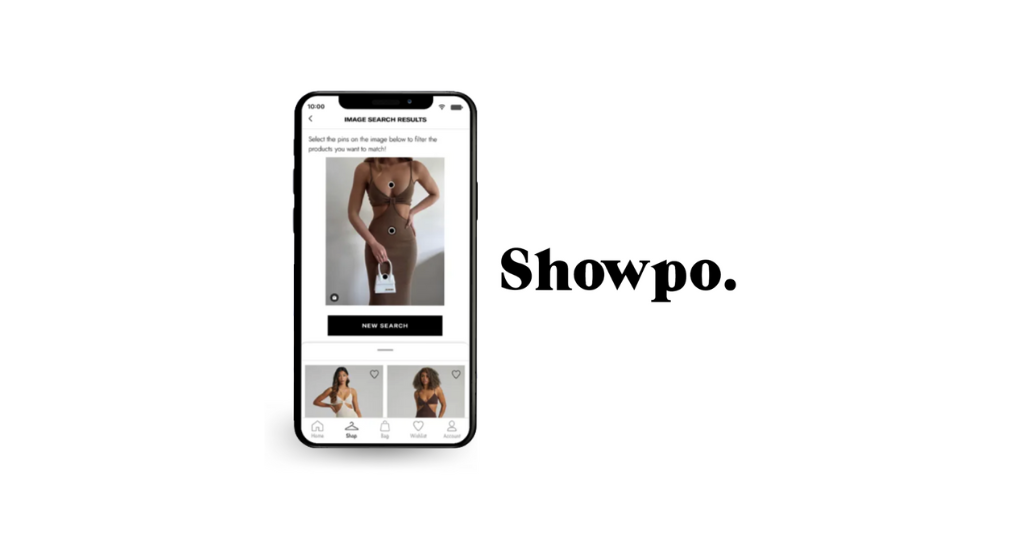
One of my favourite products I’ve launched came from taking a staple mobile app feature and pushing it a step further to truly solve a customer problem.
Most fashion and lifestyle apps today include some form of visual search, the ability to upload or capture an image and instantly find similar products. It’s convenient, fun, and great for discovery. But when we looked deeper at how customers were actually using ours, we realised there was a big opportunity to make it far more useful.
The Challenge
Our visual search tool was performing reasonably well. Engagement looked healthy, and customers seemed to enjoy the feature. But a closer look at some journey analysis told a different story.
We noticed a significant number of customers using image search, viewing the results, and then immediately abandoning the journey to head into the standard text search bar. The behaviour was consistent enough to suggest a pattern: the feature was drawing attention, but not delivering on intent.
User research sessions confirmed what we suspected, customers loved the idea of visual search, but too often, the products it returned weren’t quite right. A dress might match the colour and style but is it the dress the customer was looking for? Was it the shoes or was it the handbag? or was it the skirt worn by someone beside the anchor person in the image?
The Approach
We reframed the problem from “make visual search work better” to “help customers find what they really want from a single image.”
To get there, we worked closely with our visual search partner to explore how machine learning could interpret multiple areas of interest within a single photo not just one object. The insight was simple: when a customer uploads an image, they’re rarely looking for just one product. They might like the jacket and the boots and the bag.
So we set out to design a more flexible and intuitive experience that would let customers pinpoint exactly what caught their eye.
The Solution
The outcome was a multi-pin visual search experience, a feature designed to recognise and search for multiple product groups within a single image, rather than treating the image as one static reference point.
When a user initiated a search, the app intelligently analysed the image, identified distinct product categories (such as tops, trousers, shoes, or accessories), and surfaced visually similar results for each item. This allowed users to explore alternatives across an entire look, not just a single product.
In doing so, the experience evolved beyond a simple “find something similar” tool. It became a dynamic outfit-building journey that encouraged exploration, curation, and inspiration in one seamless flow — helping users move naturally from discovery to consideration, and ultimately, to purchase.
Key Contributions
- Identified friction in the existing visual search experience through behavioural analytics and user research.
- Partnered with our visual AI provider to prototype and implement the multi-pin capability.
- Collaborated with design and engineering to streamline the UX into a cohesive “create your outfit” journey.
- Introduced a direct path from discovery to purchase by enabling “add all to bag.”
Measurable Impact
The improved experience immediately changed how customers interacted with the feature:
- Higher engagement with visual search and longer session times.
- Increase in UPT (units per transaction) as customers built and purchased complete looks.
- Reduced drop-offs from image search to text search, signalling greater relevance and satisfaction.
Learnings
- Customer intent matters more than feature adoption. Success metrics can look healthy until you understand why customers behave a certain way.
- Iterating on familiar features can unlock big gains. Innovation doesn’t always mean starting from scratch — sometimes it’s about deepening what already exists.
- Collaboration fuels better solutions. Partnering with our visual search provider helped us move faster and deliver a smarter, more intuitive experience.